Mobile-friendly websites for mental health professionals: essential digital accessibility

Mobile-friendly websites for mental health professionals: essential digital accessibility
In today's digital landscape, mental health professionals must prioritize mobile accessibility to reach clients effectively. With over 60% of web traffic originating from mobile devices, having a mobile-friendly website is no longer optional—it's essential for practice growth and client engagement. Mental health practitioners who neglect mobile optimization risk losing potential clients and diminishing their online presence in an increasingly competitive field.
Why Mobile Optimization Matters For Mental Health Practices
Mental health services often require immediate access, especially during crisis situations or when individuals are seeking urgent support. Clients frequently search for therapists, psychiatrists, and wellness professionals while on-the-go, using their smartphones during lunch breaks, commutes, or late-night moments of reflection. A mobile-friendly website ensures these potential clients can easily navigate your services, read testimonials, and schedule appointments without frustration.
The importance extends beyond user experience. Google's mobile-first indexing means search engines primarily evaluate the mobile version of websites for ranking purposes. Mental health professionals with poorly optimized mobile sites will struggle to appear in local search results, significantly impacting their ability to attract new clients organically.
Additionally, mobile accessibility demonstrates professionalism and attention to detail—qualities that are particularly important in the mental health field where trust and credibility are paramount. When potential clients encounter a website that loads slowly or displays incorrectly on their mobile device, they may question the provider's competence and reliability.
Essential Mobile Design Elements For Mental Health Websites
Successful mobile-friendly mental health websites incorporate several critical design elements. Responsive design automatically adjusts layout, images, and content to fit various screen sizes, ensuring consistent functionality across devices. This approach eliminates the need for separate mobile sites while providing optimal viewing experiences for tablets, smartphones, and desktop computers.
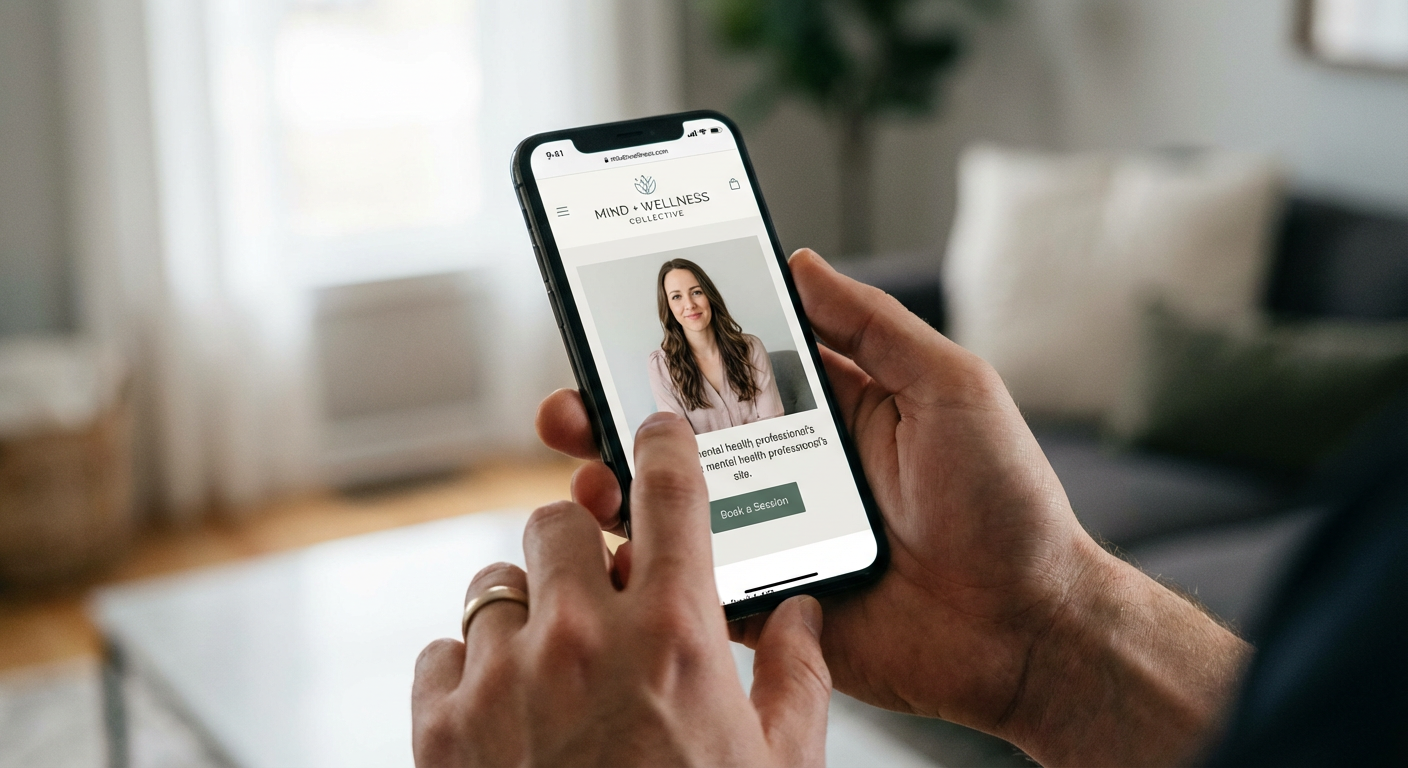
Touch-friendly navigation is equally crucial. Mobile users interact through taps and swipes rather than mouse clicks, requiring larger buttons, simplified menus, and increased spacing between interactive elements. Mental health websites should feature prominent contact information, easy-to-find appointment scheduling options, and streamlined service descriptions that don't require excessive scrolling.
Fast loading speeds are non-negotiable for mobile success. Research shows that 53% of mobile users abandon sites that take longer than three seconds to load. Mental health professionals must optimize images, minimize plugins, and leverage content delivery networks to ensure rapid page loading across all devices.
Typography and readability deserve special attention on mobile devices. Smaller screens require larger font sizes, higher contrast ratios, and adequate white space to maintain legibility. Mental health content often involves sensitive topics that require careful reading, making clear, accessible typography essential for effective communication.
SEO Strategies For Mobile Mental Health Websites
Search engine optimization for mobile mental health websites requires a specialized approach that considers both technical factors and user intent. Local SEO becomes particularly important, as clients typically search for nearby mental health services. Optimizing for location-based keywords like "therapist near me," "anxiety counseling [city name]," and "child psychologist [location]" helps practices appear in relevant local search results.
Mobile SEO success depends heavily on technical optimization. Core Web Vitals—metrics measuring loading performance, interactivity, and visual stability—significantly impact mobile search rankings. Mental health professionals should regularly audit their websites using tools like Google PageSpeed Insights to identify and address performance issues.
Content optimization for mobile requires strategic keyword integration while maintaining natural, empathetic language appropriate for mental health topics. Long-form content should be broken into digestible sections with descriptive headings, bullet points, and short paragraphs that render well on mobile screens.
Schema markup helps search engines understand website content better, potentially improving visibility in search results. Mental health practices can implement local business schema, review schema, and healthcare provider markup to enhance their mobile search presence and provide rich snippets that attract more clicks.
HIPAA-Compliant AI Chatbots For Mobile Mental Health Sites
Modern mobile mental health websites increasingly incorporate AI chatbots to enhance user engagement and provide immediate support. These automated assistants can handle initial client inquiries, schedule appointments, and provide basic information about services—all while maintaining HIPAA compliance standards essential for healthcare providers.
HIPAA-compliant chatbots offer several advantages for mobile mental health sites. They provide 24/7 availability, allowing potential clients to interact with your practice outside traditional business hours. This accessibility is particularly valuable for individuals experiencing mental health crises or those who prefer discrete initial contact methods.
However, implementing AI chatbots requires careful consideration of privacy and security requirements. The chatbot platform must encrypt all communications, store data securely, and include appropriate disclaimers about the limitations of automated responses. Mental health professionals should ensure their chatbot providers sign Business Associate Agreements (BAAs) and maintain comprehensive compliance documentation.
Effective mobile chatbots for mental health practices focus on specific functions: appointment scheduling, service information, insurance verification, and crisis resource distribution. They should seamlessly hand off complex inquiries to human staff and clearly communicate when clients are interacting with automated systems rather than licensed professionals.
Technical Implementation And Best Practices
Implementing mobile-friendly features for mental health websites requires attention to both user experience and regulatory compliance. Progressive Web App (PWA) technology can enhance mobile functionality by enabling offline access, push notifications, and app-like experiences without requiring native mobile applications.
Security considerations are paramount for mental health websites. Mobile-friendly sites must implement SSL certificates, secure contact forms, and encrypted data transmission to protect sensitive client information. Two-factor authentication options for client portals and secure messaging systems add additional layers of protection.
Regular testing across multiple devices and operating systems ensures consistent functionality. Mental health professionals should test their websites on various smartphone models, tablets, and mobile browsers to identify potential issues before they impact client experiences.
If you're looking to enhance your mental health practice's digital presence with professional mobile optimization, SEO strategies, and HIPAA-compliant AI chatbots, consider partnering with specialists who understand the unique requirements of behavioral health professionals. Contact our team to discuss how comprehensive digital marketing solutions can help your practice thrive in the mobile-first healthcare landscape.
Measuring Success And Continuous Improvement
Successful mobile optimization requires ongoing monitoring and refinement. Google Analytics provides valuable insights into mobile user behavior, including bounce rates, session duration, and conversion paths. Mental health professionals should regularly review these metrics to identify areas for improvement and track the impact of optimization efforts.
User feedback plays a crucial role in mobile website improvement. Implementing feedback mechanisms such as mobile-friendly surveys or contact forms helps identify specific user experience issues that may not be apparent through analytics alone. Client testimonials and reviews can also provide insights into how mobile accessibility impacts overall satisfaction with your practice.
A/B testing different mobile layouts, call-to-action buttons, and content arrangements helps optimize conversion rates. Mental health professionals can test various appointment scheduling workflows, contact form placements, and service presentation formats to determine what resonates best with their mobile audience.
Staying current with mobile web development trends and HIPAA compliance updates ensures continued effectiveness and regulatory adherence. Regular website audits, security assessments, and performance evaluations help maintain optimal mobile experiences while protecting sensitive client information.
Conclusion
Mobile-friendly websites have become indispensable tools for mental health professionals seeking to expand their reach and improve client accessibility. By implementing responsive design, optimizing for local SEO, incorporating HIPAA-compliant AI chatbots, and maintaining focus on user experience, mental health practitioners can create powerful digital platforms that serve their communities effectively. The investment in mobile optimization pays dividends through improved search rankings, enhanced client engagement, and streamlined practice operations. As mobile usage continues to dominate web traffic, mental health professionals who prioritize mobile accessibility will be best positioned to connect with clients and grow their practices in an increasingly digital healthcare environment.